How to Choose the Right Instrument for Your Child
A Parent’s Guide to Finding the Best Musical Fit
How to Choose the Right Instrument for Your Child
A Parent’s Guide to Finding the Best Musical Fit
Choosing an instrument is one of the most exciting parts of beginning music lessons. It can also feel like a surprisingly big decision. Should your child start with piano? Are they old enough for guitar? Would drums suit their personality better?
The good news is that parents do not need to find the “perfect” instrument on the first try. A child’s interest is usually the best place to begin, while their age, physical development, attention span, and willingness to practice can help narrow the choices.
Begin With What Interests Your Child
Children are more likely to stay engaged when they feel connected to the instrument they are learning. Pay attention to the music your child enjoys and the instruments that naturally capture their attention.
Do they pretend to perform with a microphone? Are they fascinated by the drums at concerts? Do they frequently mention wanting to play guitar or piano?
That enthusiasm matters. Even when another instrument might appear easier from an adult’s perspective, genuine interest can provide the motivation a student needs to work through the challenges of learning something new.
Consider Age, Size, and Coordination
Age is helpful when choosing an instrument, but it should not be treated as a strict rule. Children develop at different rates, and physical size and coordination can be more important than the number on a birth certificate.
A younger child may be ready for piano but have difficulty holding a full-size guitar. A student interested in violin will need an appropriately sized instrument. Some woodwinds require enough hand size to comfortably reach the keys, along with the breath control needed to produce a steady sound.
An introductory lesson can help determine whether an instrument is a comfortable match before a family makes a larger commitment.
Piano
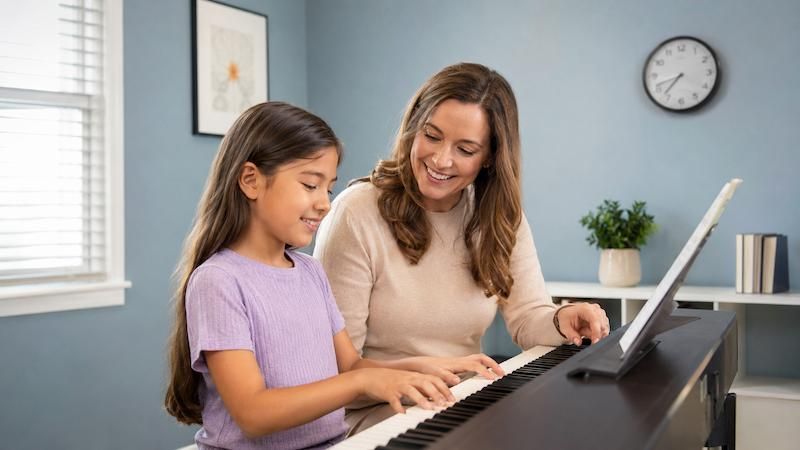
Piano is an excellent starting point, especially for children who have not settled on a particular instrument. The keys make notes visually easy to understand, and students can begin producing recognizable sounds right away.
Piano lessons also build a strong foundation in rhythm, melody, music reading, and coordination. Those skills can transfer to another instrument later if a child’s interests change.
Guitar or Ukulele
Guitar appeals to many children because it is featured prominently in popular music. However, younger students may find the size of a guitar and the finger pressure required to hold down strings challenging at first.
Ukulele can be a comfortable alternative for smaller hands. It is lightweight, has fewer strings, and allows beginners to start playing simple songs and chords relatively quickly.
The child’s size, patience, and musical interests can help determine which option is the better fit.
Voice
Voice lessons are a natural choice for children who are always singing or enjoy musical theater and performing. Students can work on breathing, pitch, vocal control, confidence, and healthy singing habits.
Because the voice is still developing throughout childhood, lessons should be taught in an age-appropriate way. The goal is not to force a young voice to sound older, but to help the student use it confidently and safely.
Violin and Other Strings
Violin, viola, and cello can be rewarding choices for children interested in orchestral music or the distinctive sound of string instruments.
These instruments require patience, careful listening, and consistent practice. Proper sizing is especially important, since an instrument that is too large can make learning unnecessarily difficult. A teacher or reputable instrument shop can help a family choose the correct size.
Drums
Drums can be a great match for students who naturally connect with rhythm, movement, and energetic music. Lessons involve much more than simply playing loudly. Students learn coordination, timing, listening skills, musical patterns, and how to play as part of a group.
Beginning drummers can often practice with a pad or electronic drum kit, so families do not necessarily need to purchase a full acoustic kit immediately.
Woodwind Instruments
Flute, clarinet, and saxophone are popular choices for students participating in school band programs. Physical development can be particularly important with these instruments.
Students need enough hand size and coordination to reach the keys comfortably. Breath support, embouchure, and—in the case of saxophone—the weight of the instrument should also be considered.
A lesson with an experienced woodwind teacher can help determine whether a student is physically ready and which instrument may suit them best.
Think About Practice and Instrument Costs
Before enrolling, parents should consider what practicing the instrument will require at home. Some instruments are easier to accommodate than others, and costs can vary considerably.
Families may need to purchase or rent an instrument, along with accessories such as reeds, strings, books, stands, or practice equipment. Renting can be a sensible option while a child is getting started, especially when sizing may change as the student grows.
It is also helpful to set realistic practice expectations. Short, consistent practice sessions are usually more productive than occasional long sessions.
What If Your Child Changes Their Mind?
Changing interests are a normal part of childhood. If your child begins asking to switch instruments, talk with the teacher before making an immediate change.
Sometimes students lose enthusiasm because they have reached a challenging point, need different music, or would benefit from a new practice approach. Giving the first instrument some time allows the student to move beyond the earliest frustrations and experience meaningful progress.
If the interest still is not there, changing instruments does not mean the original lessons were wasted. Rhythm, listening, coordination, and music-reading skills can follow the student to their next instrument.
You Do Not Have to Decide Alone
When a child is undecided, piano is often a strong place to begin because it provides a broad musical foundation. An introductory lesson can also give the student a chance to meet a teacher, experience the instrument, and receive practical guidance.
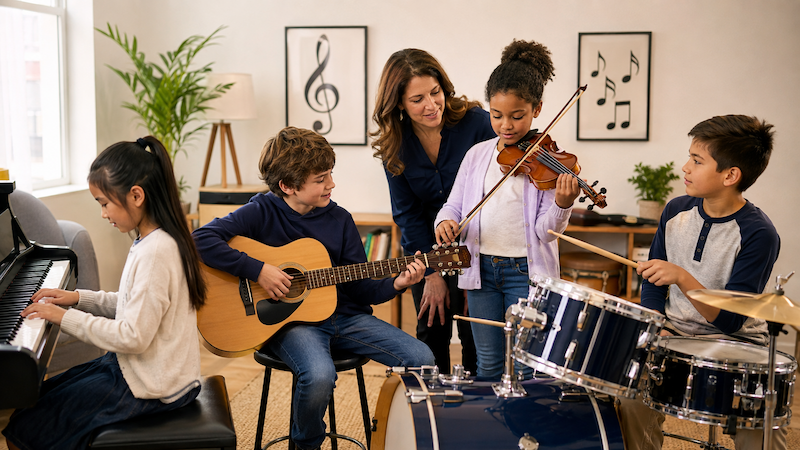
At Dixboro Music Academy, families have access to instructors across a variety of instruments. This allows the academy to help students find the right starting point and continue supporting them as their interests and abilities develop.
The goal is not simply to choose an instrument. It is to help your child build a lasting connection with music.
Ready to Explore Music Lessons?
Contact Dixboro Music Academy to discuss your child’s age, interests, and experience, or schedule an introductory lesson to help find the right fit.
Dixboro Music Academy
5155 Plymouth Road
Ann Arbor, MI
734-418-0640
Related Article
What Age Should You Start Music Lessons?
Learn how age, development, and interest can help determine when your child is ready to begin.
Ready to Explore Music Lessons?
Choose an instrument, meet one of our instructors, and find a lesson time that works for your family.
Book a LessonDixboro Music Academy • 5155 Plymouth Road, Ann Arbor • 734-418-0640